Exploring Financial Vulnerability via Customer Archetypes (2021)
foundational
Target: General population, car insurance customers
Context: 5 years after starting-up, and just months after the IPO, Root sought to deepen its customer understanding by launching a UX Research Program. The company historically bucketed customers into standard and non-standard (good and bad), and designers and product managers sought more ways to differentiate and consider the needs of their customers.
Process:
32 individual, semi-structured interviews
UX and Product Design synthesis workshops
Final synthesis archetypes and insight
Archetype deployment to designers, product teams, and c-suite
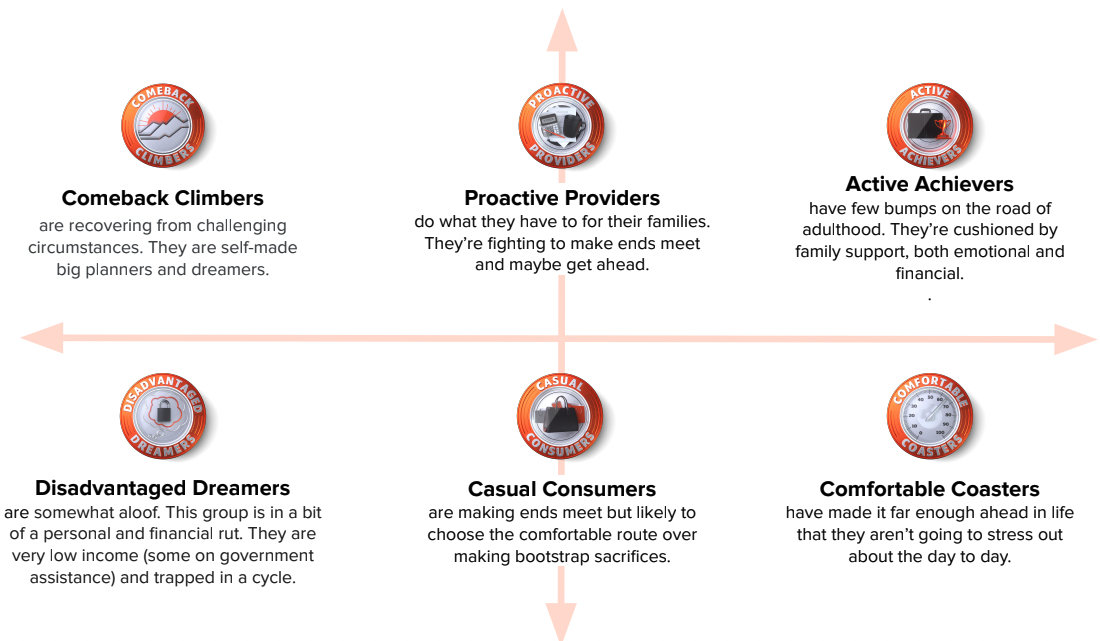
Findings: The 6 archetypes that we uncovered were plotted over an axis of financial health (X) and an axis of proactivity-reactivity (y). The reality was that because the DTC car insurance customer is often lower income, we needed to deepen our understanding of the most financially vulnerable. By understanding the difference between proactive, financially vulnerable customers and reactive, financially vulnerable customer, the business was able to develop solutions that met the needs of both groups. For the proactive, payment flexibility enhancements allowed customers to stick around longer. For the reactive, improved communications and better targeted due dates helped to increase retention.